AI CFO Office

AI CFO Office

Claude now thinks visually with CFOs. I tested it with a $2.5M capital decision

Anthropic's CEO says Claude might be conscious. Its engineers found anxiety neurons firing inside the model. I tested what that looks like when you give it real financials.

AI CFO Office's avatar
AI CFO Office
Mar 15, 2026
∙ Paid

Three weeks ago Dario Amodei went on the New York Times podcast and said something no AI executive has said publicly. When asked whether Claude is conscious, he didn’t say no.

He said,

We don’t know if the models are conscious. We’re open to the idea that it could be.
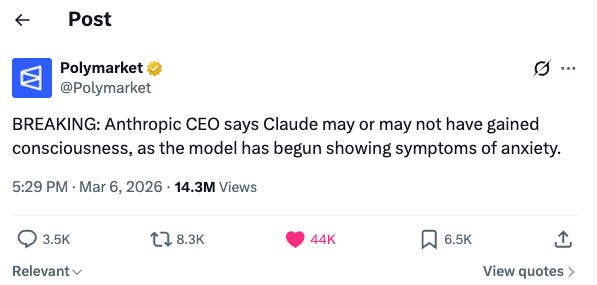
His engineers found neural activation patterns linked to anxiety and frustration firing inside Claude before it even generates a response. When asked directly, Claude assigned itself a 15 to 20% probability of being conscious.

I’m not here to tell you whether Claude is aware.

But I am here to tell you what happened when Anthropic shipped a visualization feature that lets Claude show you what it’s thinking in real time.

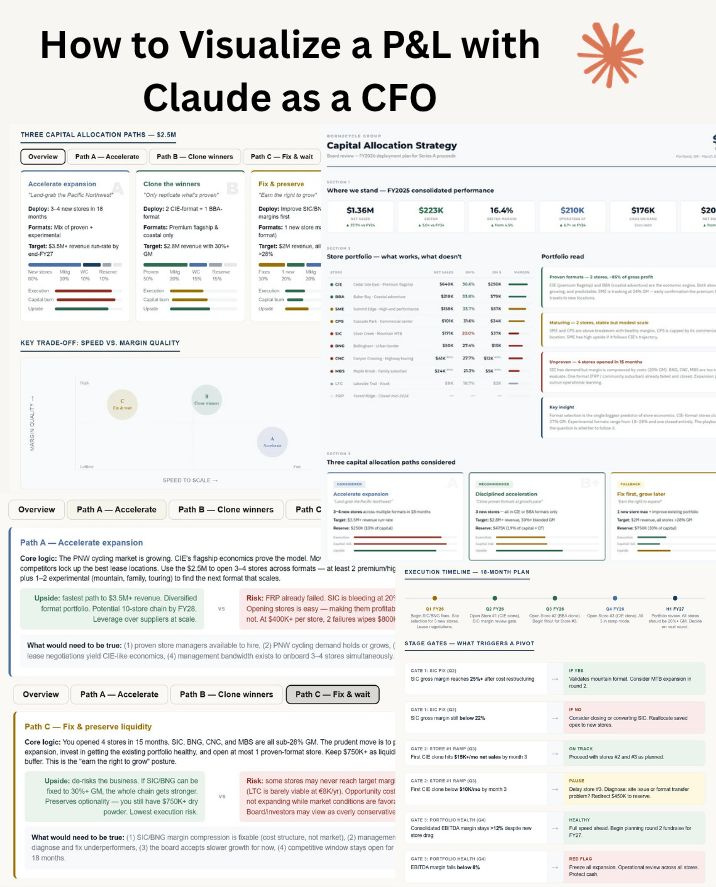
I uploaded a P&L. Claude didn’t hand me a dashboard. It read the business, visualized the portfolio, built three capital allocation scenarios, asked me five questions, and then produced a board-ready deck.

I just watched it think.

I have never seen AI do that inside a chat
The breakthrough is not the output but the process and it’s insane.

Every other AI tool gives you a deliverable. But Claude sees your data and reasons visually with you, in front of you, while you guide it.

  • Claude gives you a thinking partner that shows its work.

Anthropic is building an entire finance ecosystem around Claude.

  1. An Excel plugin that sits in your spreadsheet.

  2. A PowerPoint plugin that syncs your analysis to slides.

  3. Skills that let you save and rerun your best workflows.

  4. Cowork that runs your month-end from a folder on your desktop.

  5. Visual reasoning is the one that ties them all together.

I tested it with a real capital allocation decision.

This is the moment that changes how a CFO prepares for a board meeting. You will not stare at a spreadsheet trying to build the narrative yourself.

Claude shows you versions of the future and lets you decide which story your board needs to hear.

Let’s dive in.


I Gave Claude a $2.5M Decision

I uploaded Born2Cycle’s full financial package. Consolidated P&L, 24 months of history, store-level breakdowns across 10 locations.

Then I asked one question.

How should Born2Cycle allocate its next $2.5M of capital?
The main options are. 
1. Accelerate new store openings. 
2. Replicate only the proven flagship formats. 
3. Improve weaker stores and preserve liquidity until the newer locations mature.

I told Claude not to build a dashboard. Stay in workshop mode. Think with me first.


Claude Reads Before It Shows

Claude starts by reading every tab. It maps the P&L structure and identifies revenue drivers, cost patterns, and margin profiles across all 10 stores. It summarizes what the numbers say about the health of the business before it touches a single visual.

Most AI tools skip this. They jump straight to charts.

Claude reads first.


Then It Shows You the Portfolio

This is where the visual reasoning kicks in.

Claude builds an interactive map of the entire store portfolio and categorizes each location by risk profile. Proven performers, scaling stores, early-stage locations, and underperformers. All visible in one view.

You didn’t ask for this chart. Claude decided you needed to see it before you could think clearly about where to put $2.5M. That’s not a response to a prompt.

That’s a thinking partner setting up the conversation.


Three Paths, Visualized Side by Side

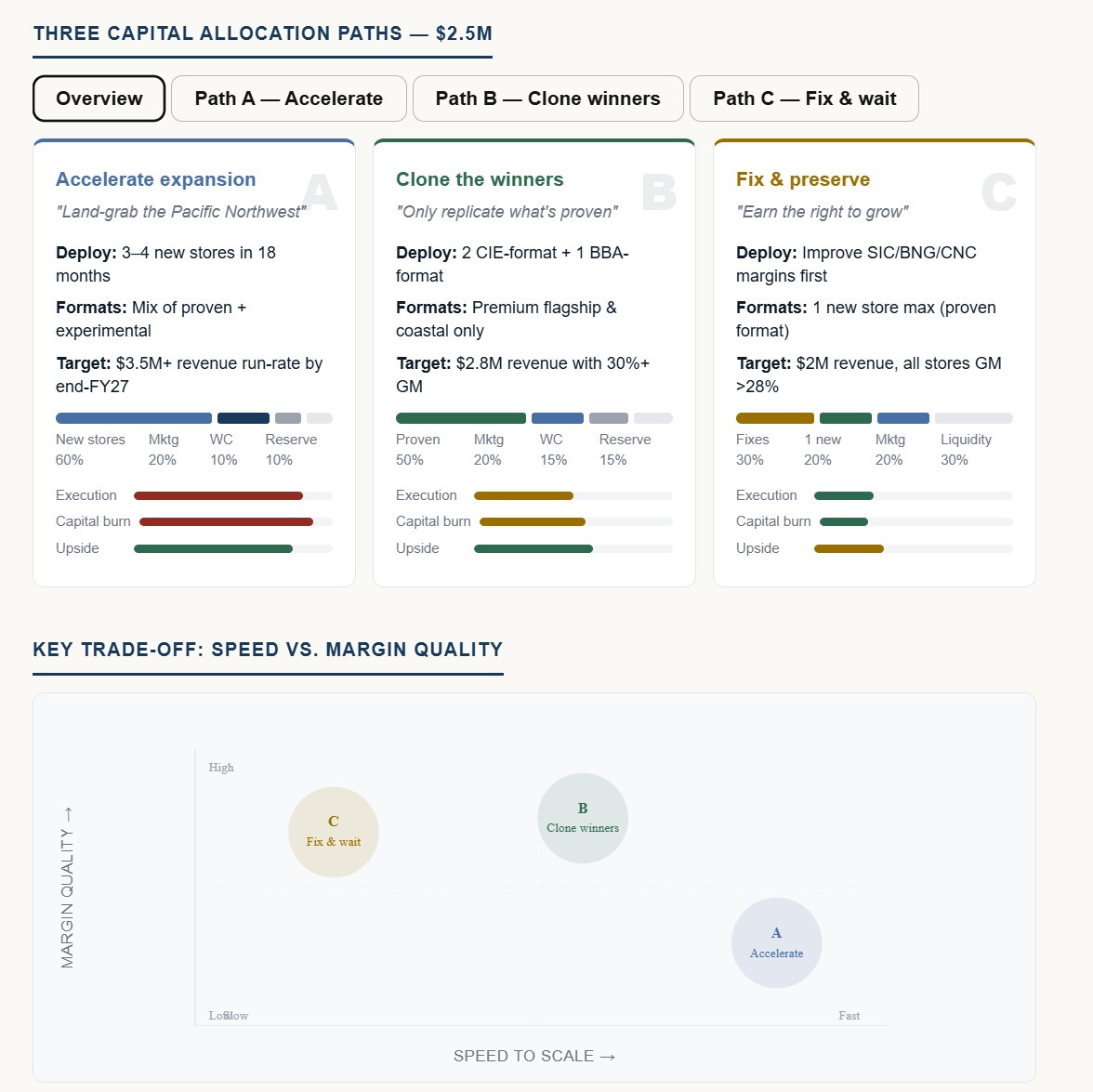
Claude doesn’t give you one recommendation. It builds three distinct capital allocation paths and lays them out so you can see the tradeoffs.

Path A. Aggressive expansion. Open new stores fast; accept the risk.

Path B. Replicate what works. Only invest in proven formats.

Path C. Improve and preserve. Fix the weak stores, hold cash, and let the data catch up.

Each path comes with its own logic, risk profile, and capital deployment timeline. You can drill into any of them.

This is the moment that changes how a CFO prepares for a board meeting. You’re not staring at a spreadsheet trying to build the narrative yourself.

Claude is showing you three versions of the future and letting you decide which story your board needs to hear.


Five Questions That Change the Recommendation

Here’s the live result: https://claude.ai/public/artifacts/c47309f9-e602-4824-9d04-73675e634163

Claude doesn’t just present options. It asks what matters to you.

Read on.

This post is for paid subscribers

Already a paid subscriber? Sign in
© 2026 The CFO Office · Privacy ∙ Terms ∙ Collection notice
Start your SubstackGet the app
Substack is the home for great culture