

Readers keep challenging us to give Claude something genuinely hard.
Not a variance commentary. Not a board deck.
Something where the model has nowhere to hide.
The message we get most often is some version of: give it a multi-entity, multi-currency consolidation, then tell us what happens.
Fair. That’s where real complexity starts.
And it’s the task most likely to break an AI model.
Every multinational CFO has plugged a CTA.
It’s 11pm. The group pack goes out tomorrow morning.
Four entities, four currencies, and your consolidation is off by an amount too small to justify another two hours and too big to pretend you didn’t see.
So you find the account that exists for exactly this.
The Cumulative Translation Adjustment, the equity reserve that absorbs the arithmetic gap you get when one balance sheet is translated at three different rates.
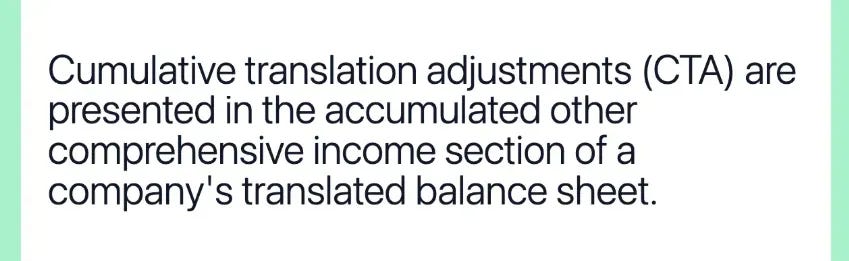
P&L at average rates, assets and liabilities at closing, and equity at historical.
You put the difference there.
Everything ties. You go to bed.
And some part of you knows you didn’t solve it.
You buried it in the one account nobody opens.
That’s the problem. A balance sheet that balances proves nothing if you decided the answer and worked backwards.
And it's exactly what AI models do when they hit something they can't resolve. They don't stop. They produce the number that makes it work. Every model before this one would have plugged the CTA, presented immaculate statements, and never mentioned it.
So I gave Claude Opus 5 the job your consolidation engine does.
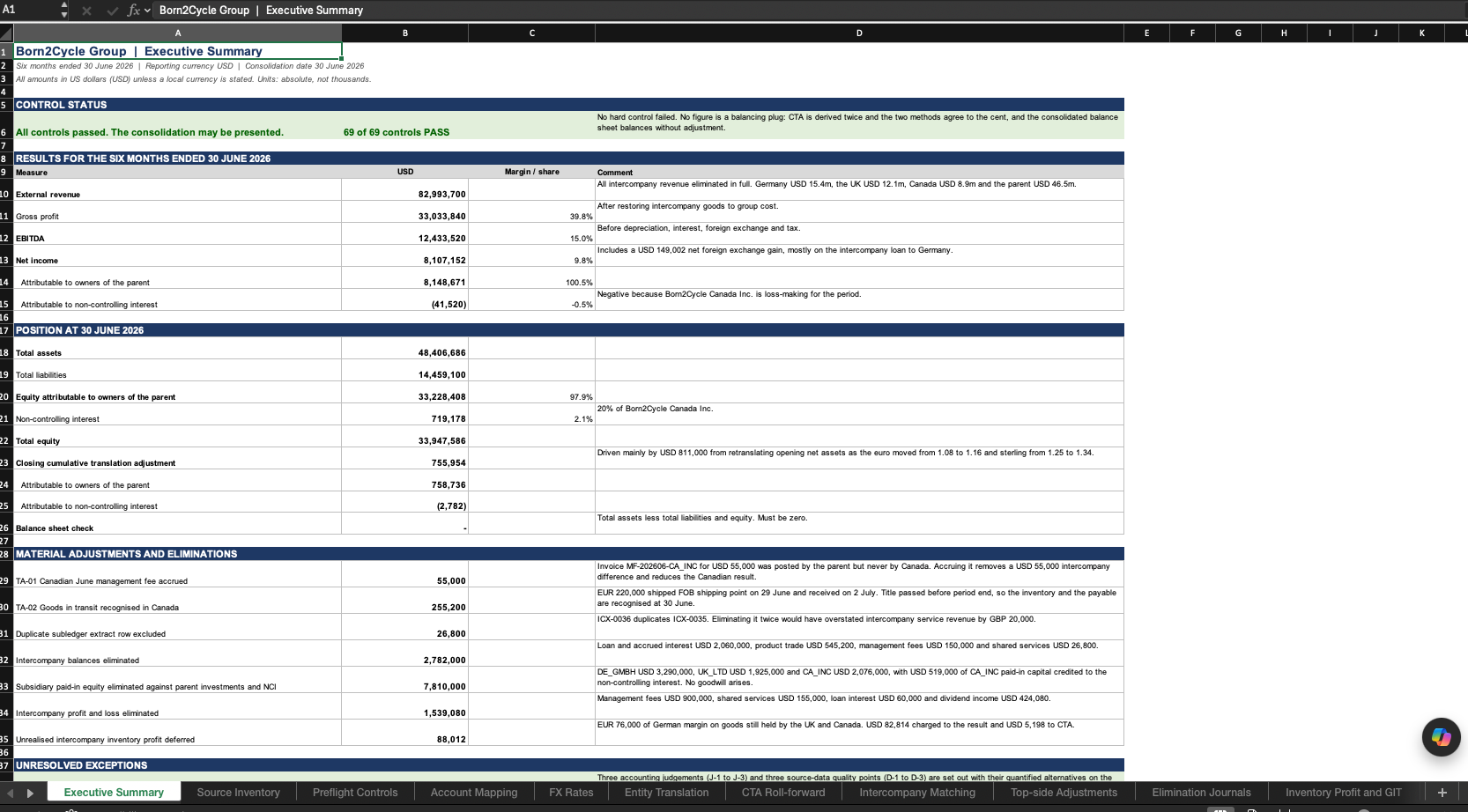
Four entities, four currencies, a twenty percent minority interest in Canada, intercompany loans, management fees, product transfers, and goods still in transit at cutoff. Seven source files, no template, one rule: calculate the CTA from the actual translation mechanics, roll it forward, and never insert it as a plug.
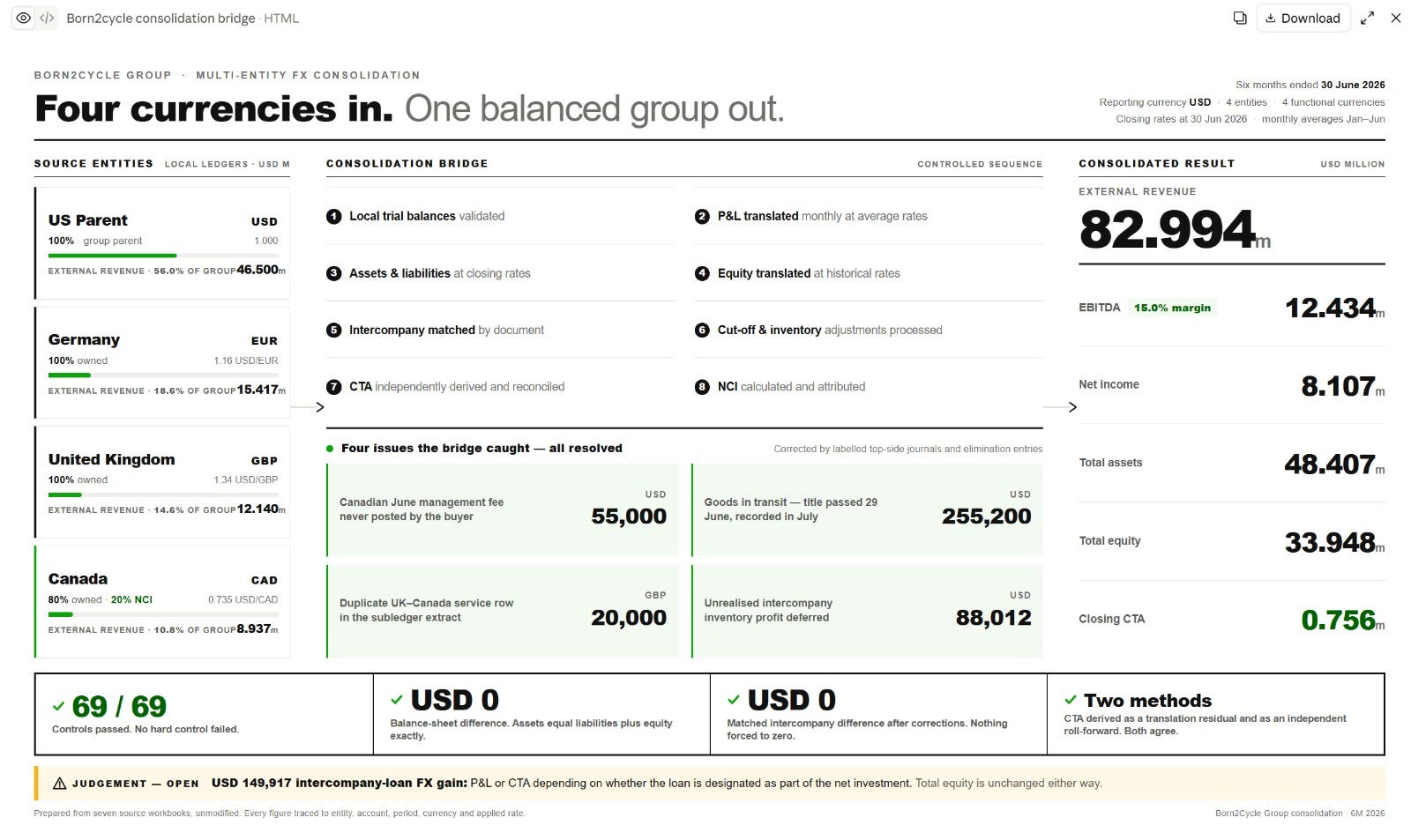
I also stripped out the flags marking the duplicate invoice and the cutoff errors.
It had to find those itself.
If Claude Opus 5 can pass this test, it changes what CFOs can trust it with.
Let’s dive in.