Self-improving finance sounds like the thing every CFO is trained to fear.
The AI rewrites the close. It changes an assumption nobody approved. It quietly updates a forecast model, and the audit committee finds out three months later when the number does not tie.
That is not what self-improving finance means.
Or it is not what it should mean.
Self-improving finance does not mean the AI rewrites your process behind your back. It means every finance cycle produces proposed improvements, and the CFO decides which ones become part of the operating system.
The AI proposes.
The CFO disposes.
Nothing changes without a sign-off.
Here is the problem that the system solves.
Every close, your team learns something. A variance pattern that keeps recurring. A cleaner way to frame the e-bike margin story for the board. A reconciliation fix that saved two hours. A judgment call about when an inventory build is a bet and when it is a warning.
And every close, that learning evaporates. It lives in the controller’s head. It lives in a Slack thread. It lives in a review meeting nobody wrote down. Next close, you re-learn the same lesson from scratch.
The people get smarter. The system does not. And when the controller takes the job in Denver, his judgment walks out the door.
That is the open loop most finance functions run.
The learning itself never compounds.
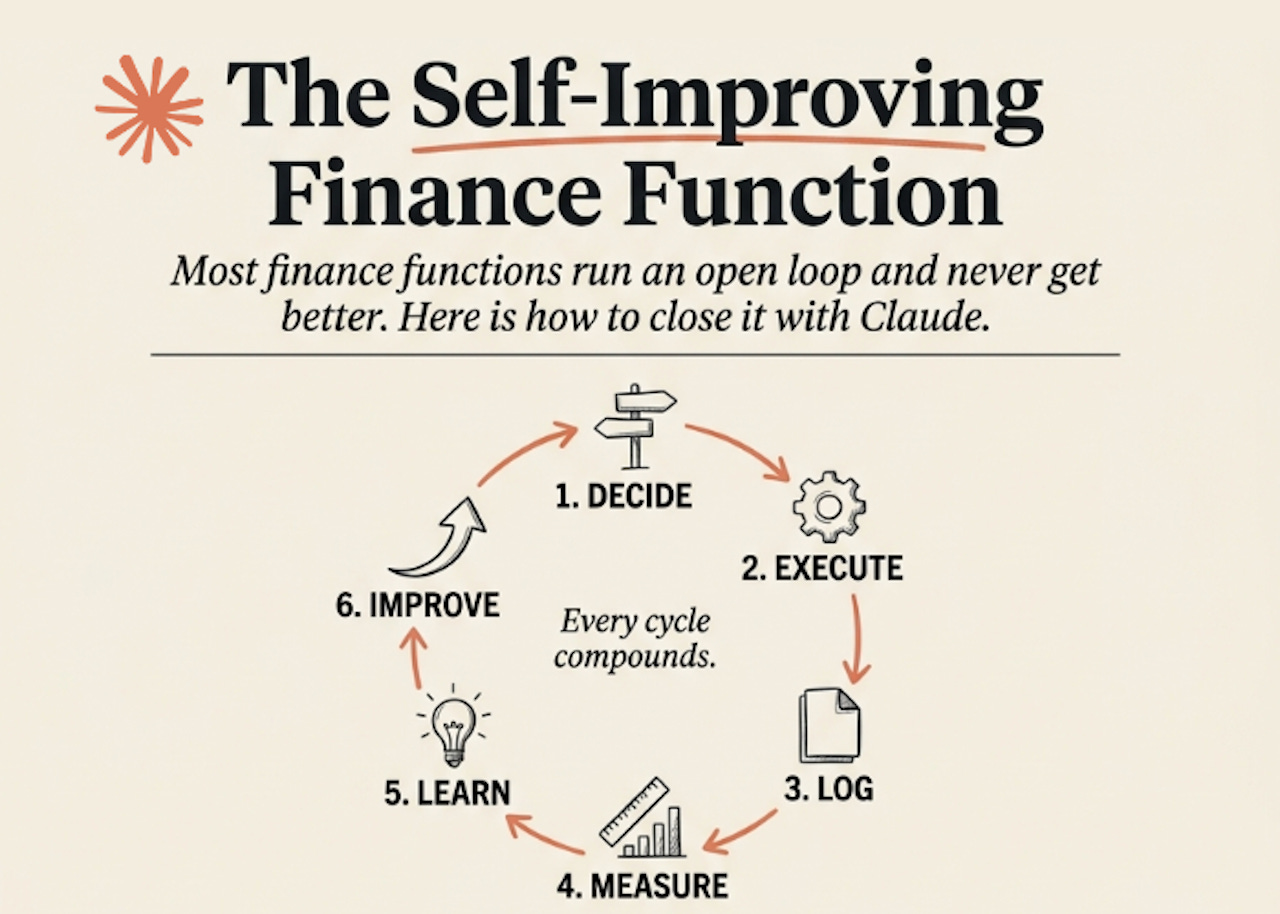
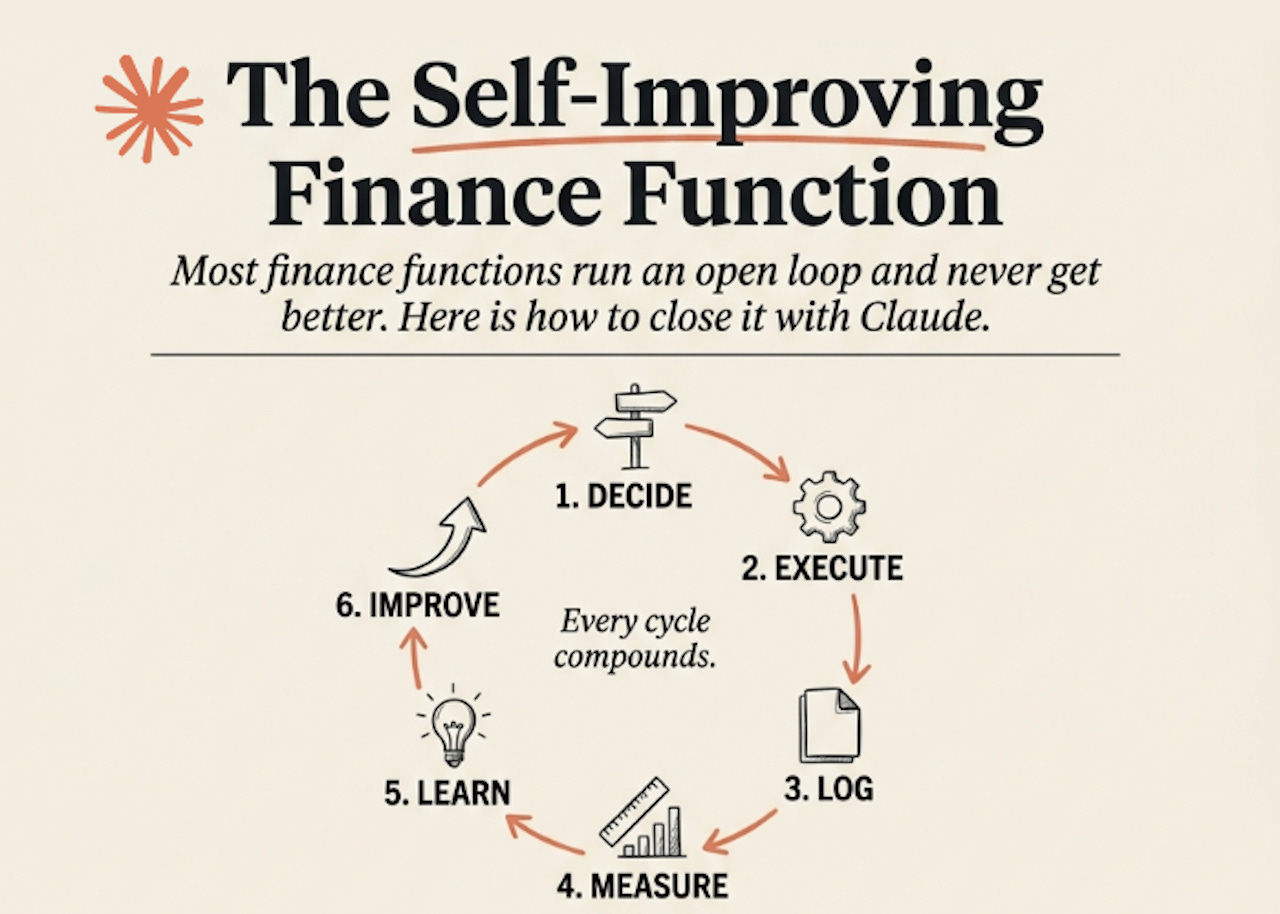
The self-improving finance function is the opposite.

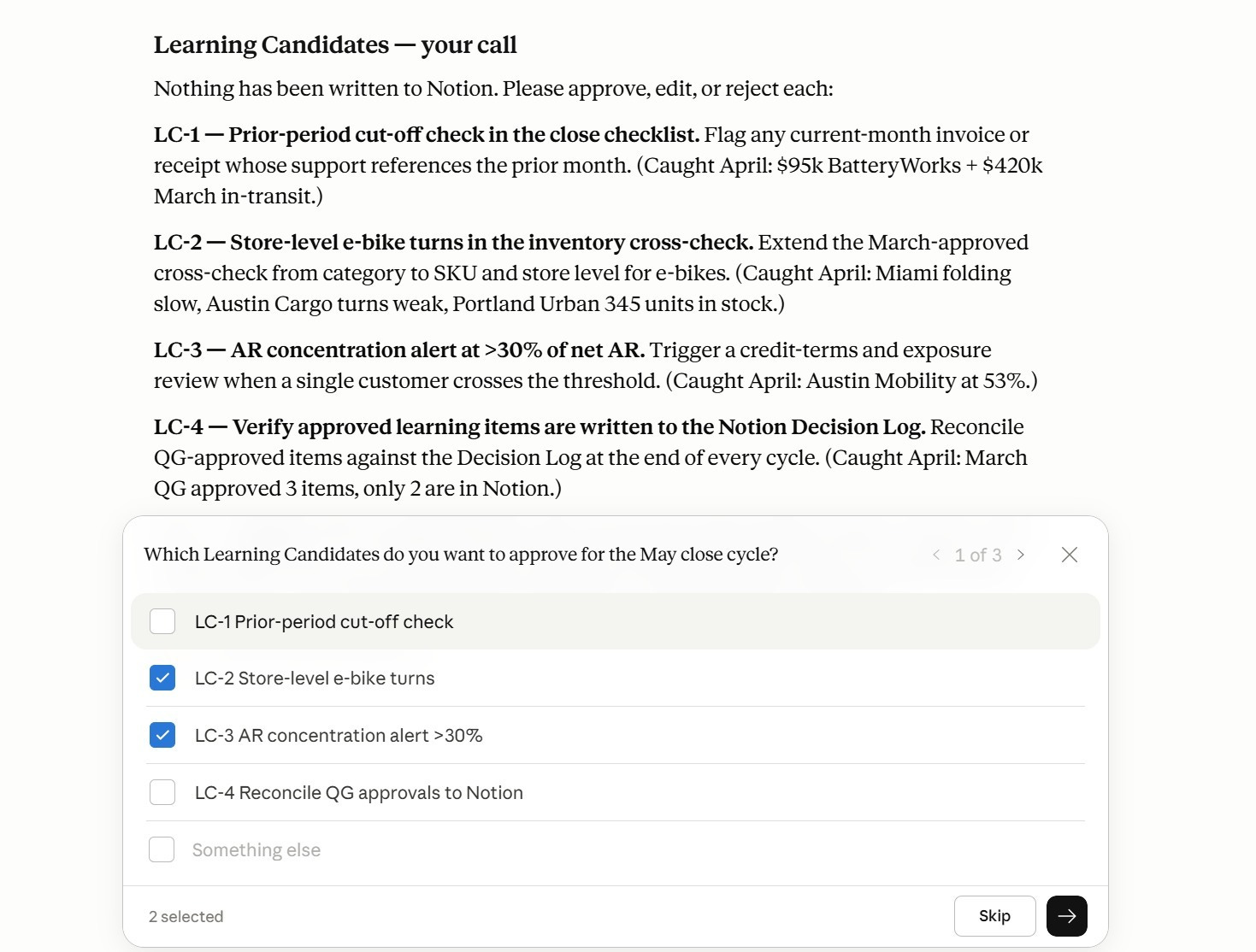
Every cycle it captures what was learned as a set of candidates. The CFO approves the ones worth keeping. They go into a decisions log the next cycle reads before it does anything else. The function compounds. The judgment stays in the building even when the people leave.
I just built it on three tools and a SKILL pack.
Google Drive holds the evidence.
Notion holds the decisions and the learnings.
Claude Cowork is the operator that runs the close, proposes the improvements, and stops to ask the CFO which ones to keep.
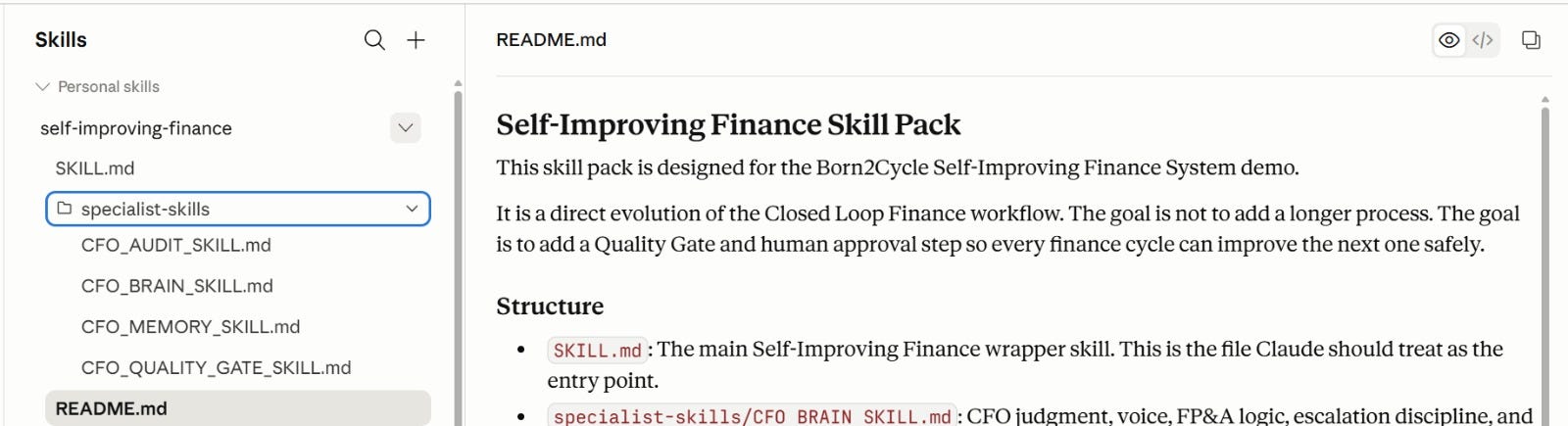
+self-improving finance skill pack.zip.
I am sharing the full install below for every CFO who wants to build an AI native finance function that improves itself.
Your CEO and the Board will be really impressed.
Let’s dive in.
How to build a Self Improving Finance function as a CFO
Before the install, understand the shape.
The system has three layers and each one has a job.
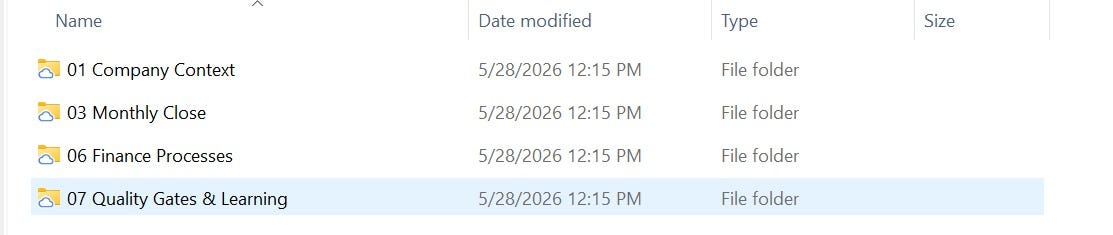
Google Drive is the evidence layer. Close packages, forecasts, board materials, and review notes live here. The whole finance team can reach them.
Notion is the decisions layer. Every approved decision and every approved learning lives in a structured log. This is the memory. It is the part that compounds.
Claude Cowork is the operator. It reads the evidence, reads the prior decisions, runs the close review, and proposes the improvements. It never writes to the decisions layer on its own. That is the human-in-the-loop boundary.

Download the self-improving finance skill pack.zip.