CFOs can build a self-improving finance function with Claude
Build a self-improving Company with AI.

The best CFOs do not just close the books. They get sharper every cycle. But almost none of them keep what they learn.
A messy reconciliation shows the cutoff checklist is weak. A variance that shows up two months running tells you which signal you should have caught earlier. A board member asks the one question your deck did not answer, and you make a mental note to fix it next time.
Then next month starts, and you fix nothing. The note is gone. The lesson stayed in your head, and your head is full.
That is the finance loop almost every company runs. The CFO learns. The system forgets. And the team relearns the same lesson it already paid for.
I wanted to see if Claude could close that gap.
Not remember what happened.
But change what happens next.
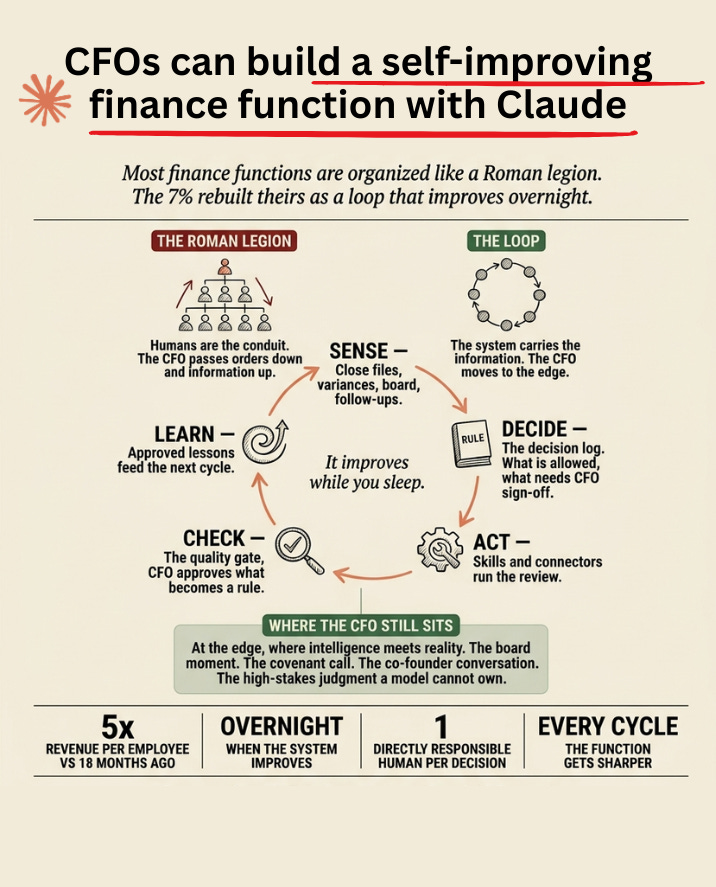
Here is the difference that matters.
Closed-loop finance remembers the last cycle.
Self-improving finance rewrites the next one.
A normal AI workflow gives you an output and stops. A close memo. A variance analysis. A board narrative. Useful, and done.
A self-improving workflow gives you the output and then asks one more question. What should change so next month runs better?
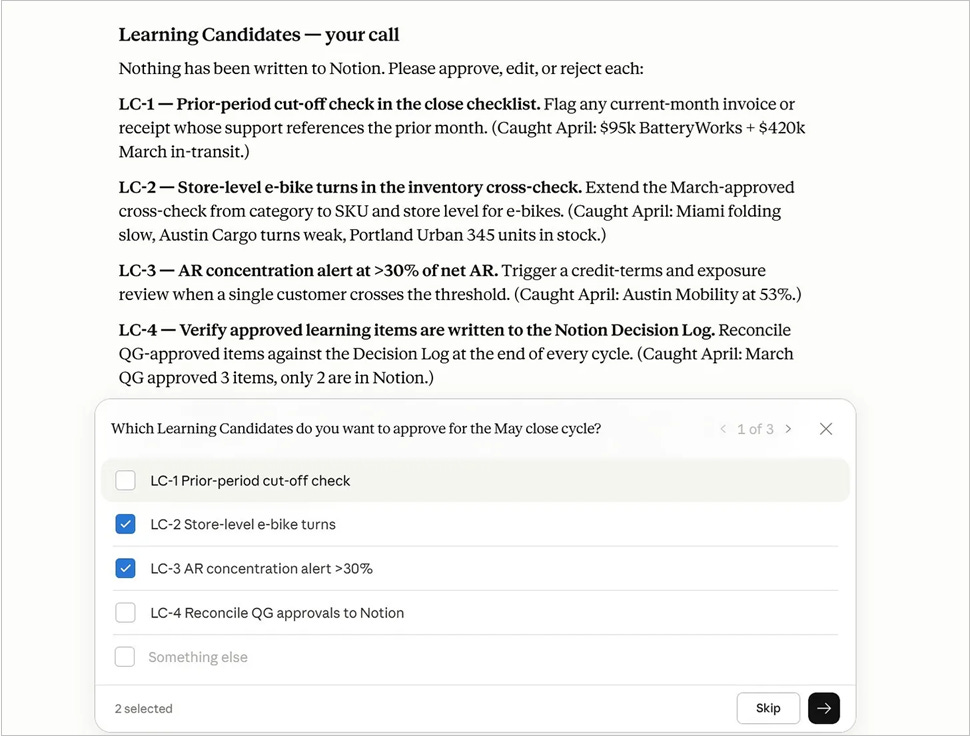
That question is the entire game.
Every close is hiding signals about your own process. A late invoice is telling you the cutoff checklist has a hole. A recurring inventory issue is telling you the review logic is incomplete. A follow-up you have chased three months in a row is telling you the workflow keeps teaching the same lesson because nobody wrote it down.
You already notice these things. The problem is turning them into operating logic before they evaporate.
So I built it with Claude.
Below, I am sharing the following:
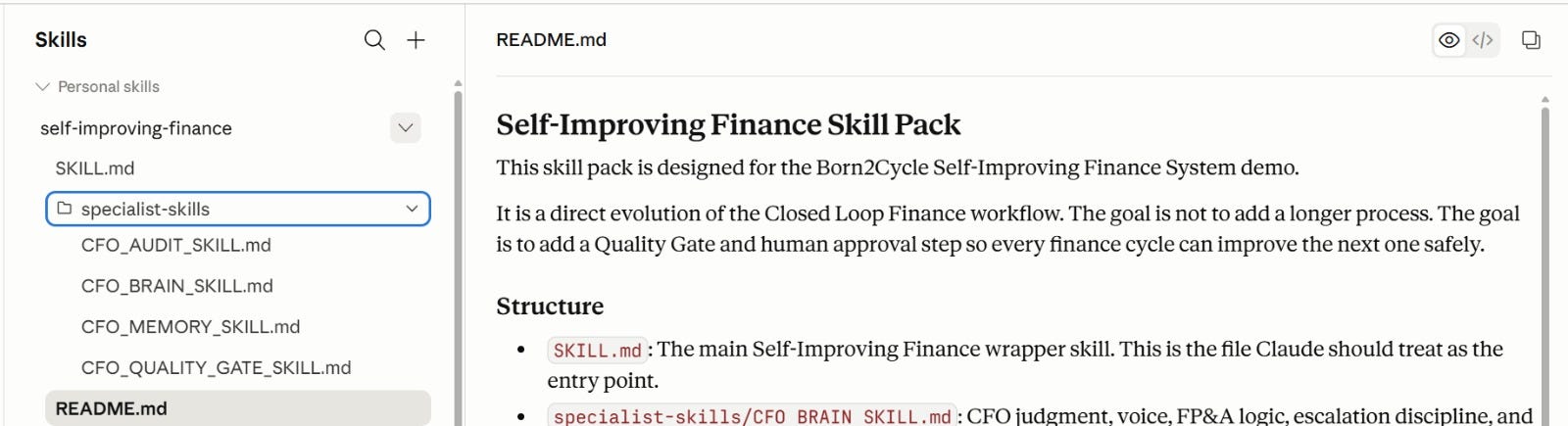
Full Self-Improving Finance System Pack.
The Claude skill pack that teaches Claude to run the review, the quality gate, and the learning cycle. The decision log that becomes your structured memory and approval layer.
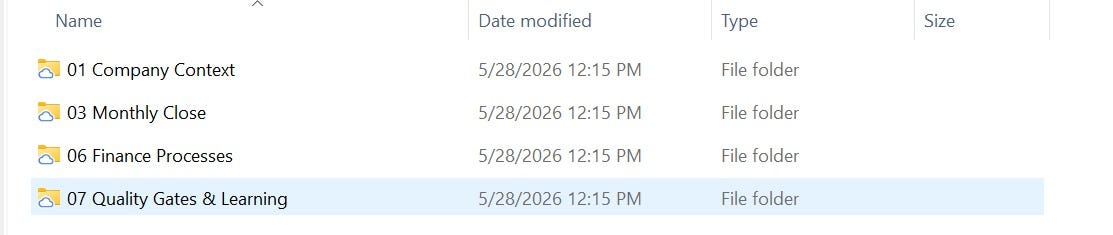
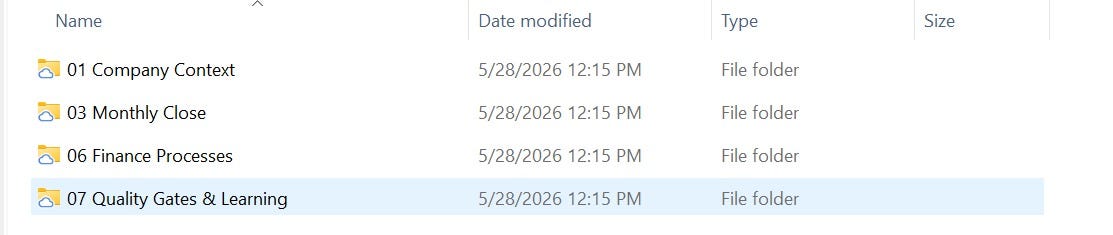
The starter folder with the close evidence structure already built.
And the exact prompt that runs the whole thing and hands you CFO-approved learning candidates at the end.
Let’s dive in.
Build a self-improving finance function with Claude
Before the install, understand the shape.
The system has three layers and each one has a job.
Google Drive is the evidence layer. Close packages, forecasts, board materials, and review notes live here. The whole finance team can reach them.
Notion is the decisions layer. Every approved decision and every approved learning lives in a structured log. This is the memory. It is the part that compounds.
Claude Cowork is the operator. It reads the evidence, reads the prior decisions, runs the close review, and proposes the improvements. It never writes to the decisions layer on its own. That is the human-in-the-loop boundary.
Download the self-improving finance skill pack.zip.