

Every CFO knows the month where the numbers look fine and the bank balance does not. Revenue beats budget. Gross margin lands close to plan. EBITDA is broadly where it should be.
And cash is materially below forecast, and nobody on the team can tell you why from the P&L, because the P&L is the thing saying the month was good.
Warren Buffett said it cleaner than the rest of us ever have.
“References to EBITDA make us shudder. Does management think the tooth fairy pays for capital expenditures?”
EBITDA tells a story about profit.
Cash tells the truth about the business.
The gap between the two is exactly what a month like this is hiding.
The answer is real, and it is somewhere in your systems. It is just scattered. A piece of it is in AR aging. A piece in the AP run. A piece in inventory, in returns, in the marketplace settlement file, in customer terms, and in last month’s board commentary.
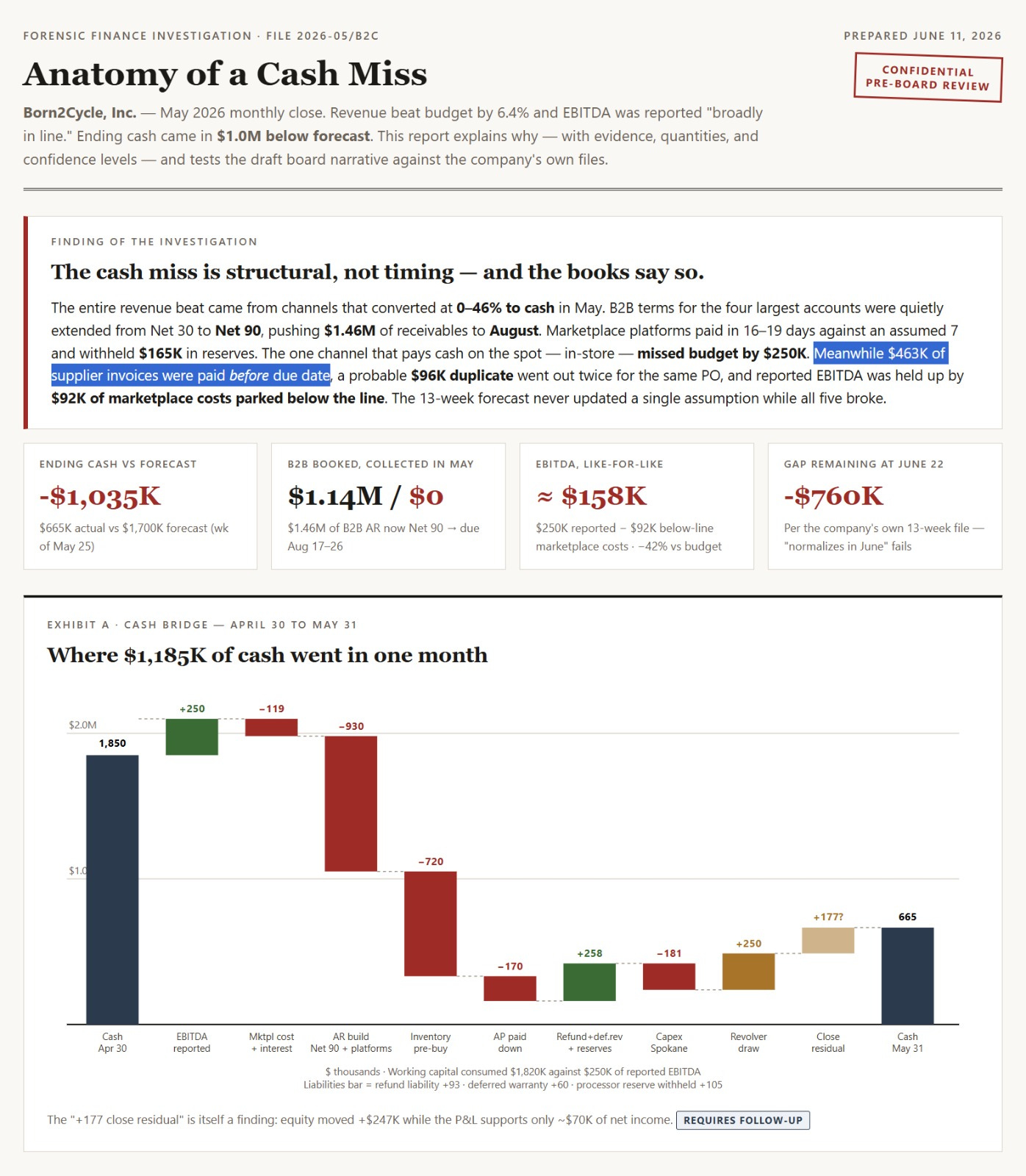
No single report holds it. Finding it means reading a dozen files against each other, and that has always been a job for a senior person and a long week.
Until now, AI did not help much with this. It answered questions. You asked what the AR balance did; it told you. You asked it to explain a variance; it explained the one you had already found. The thinking, the part where you decide which threads to pull and how they connect, stayed with you.
But when Anthropic released Claude Fable 5, the public version of its Mythos-class model, the coverage was all about cybersecurity because that is where Mythos built its name. It can take a pile of small, unremarkable signals and chain them into a vulnerability that no single signal reveals.
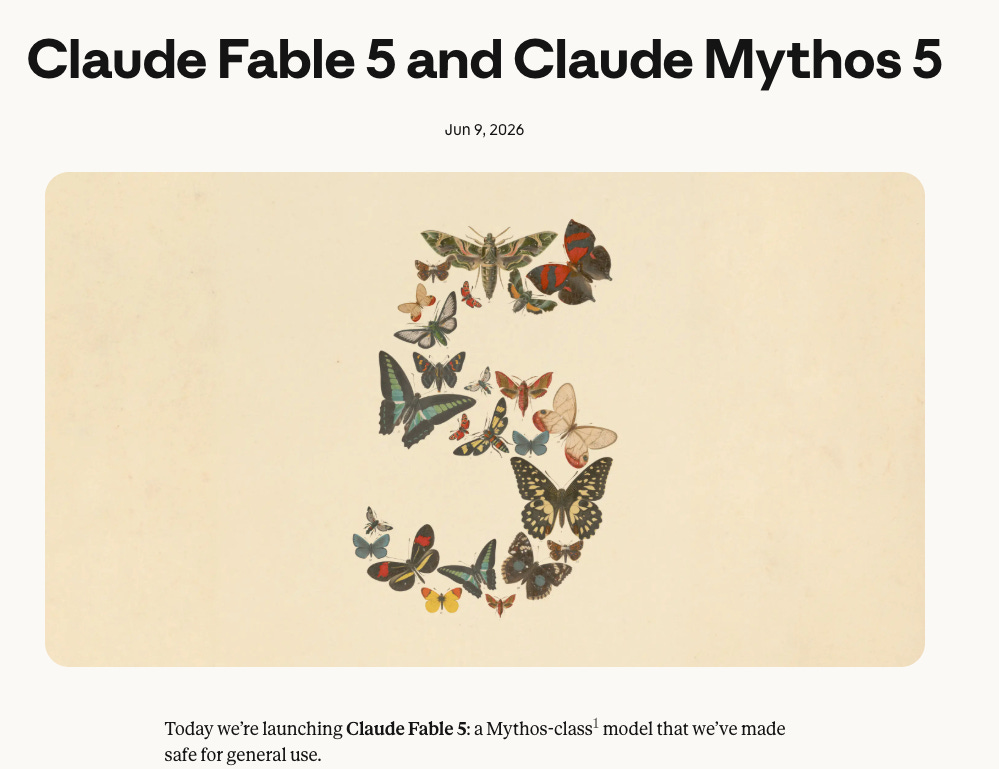
Finance has the same shape. The cash miss is never one thing.
It is a channel mix that quietly shifted toward slower-paying customers, plus an AR build, plus inventory bought for the old mix, plus AP going out the door faster than planned, plus settlements that lagged, plus returns running hot, plus a forecast still running on last quarter’s assumptions.
Each one looks like noise. Chained together, they are the whole story.
That is the shift, and it has nothing to do with benchmarks.
The old use case was: explain this variance.
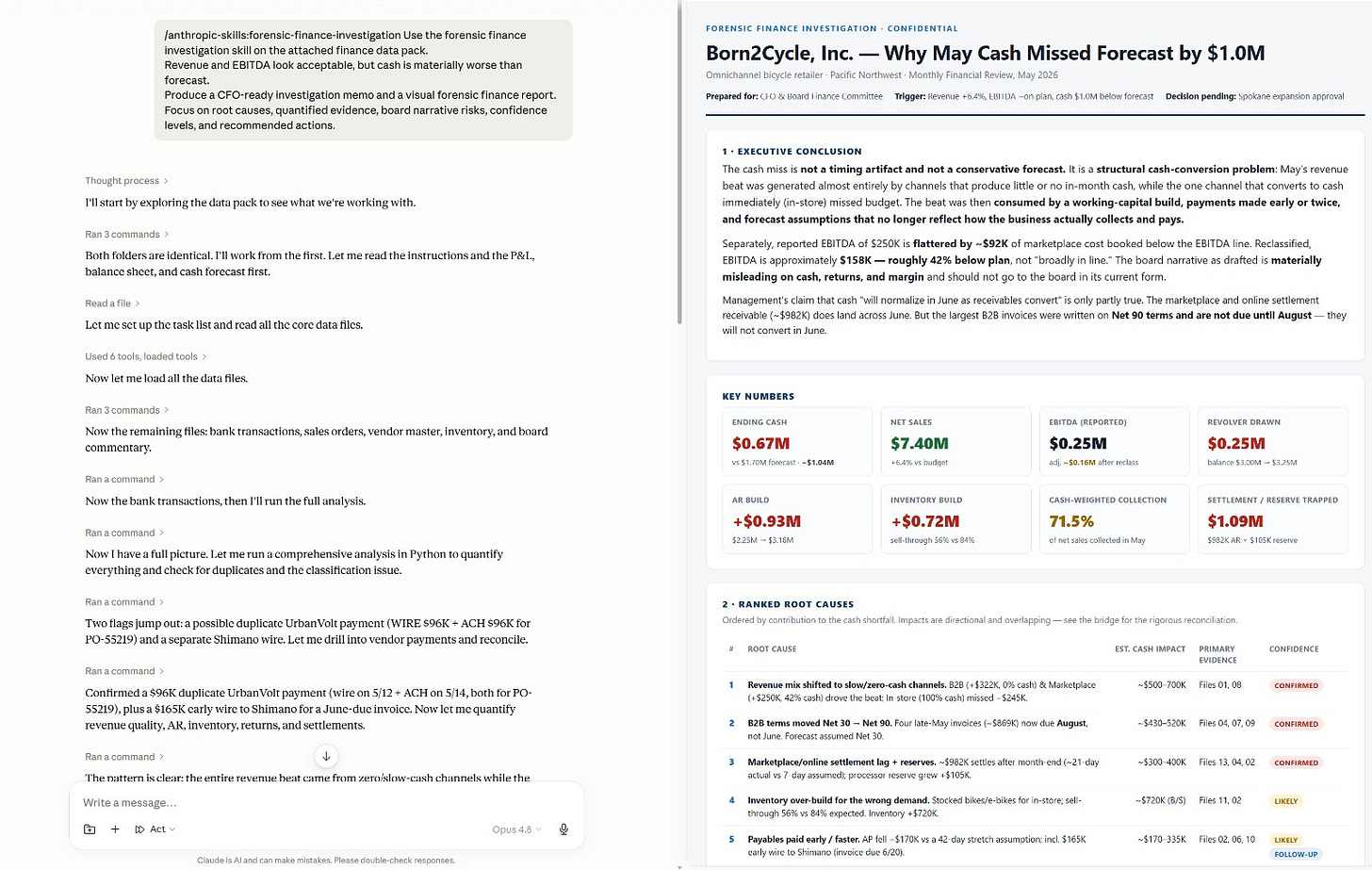
The new use case is: investigate why the result does not make sense, prove it with evidence, and help me decide what to tell the board.
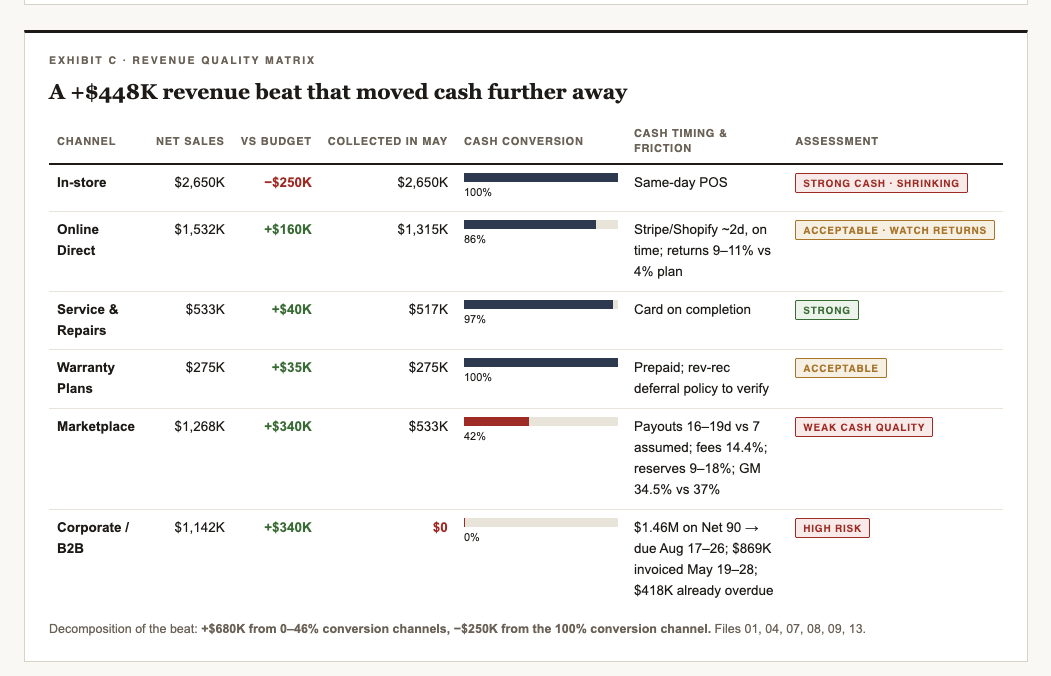
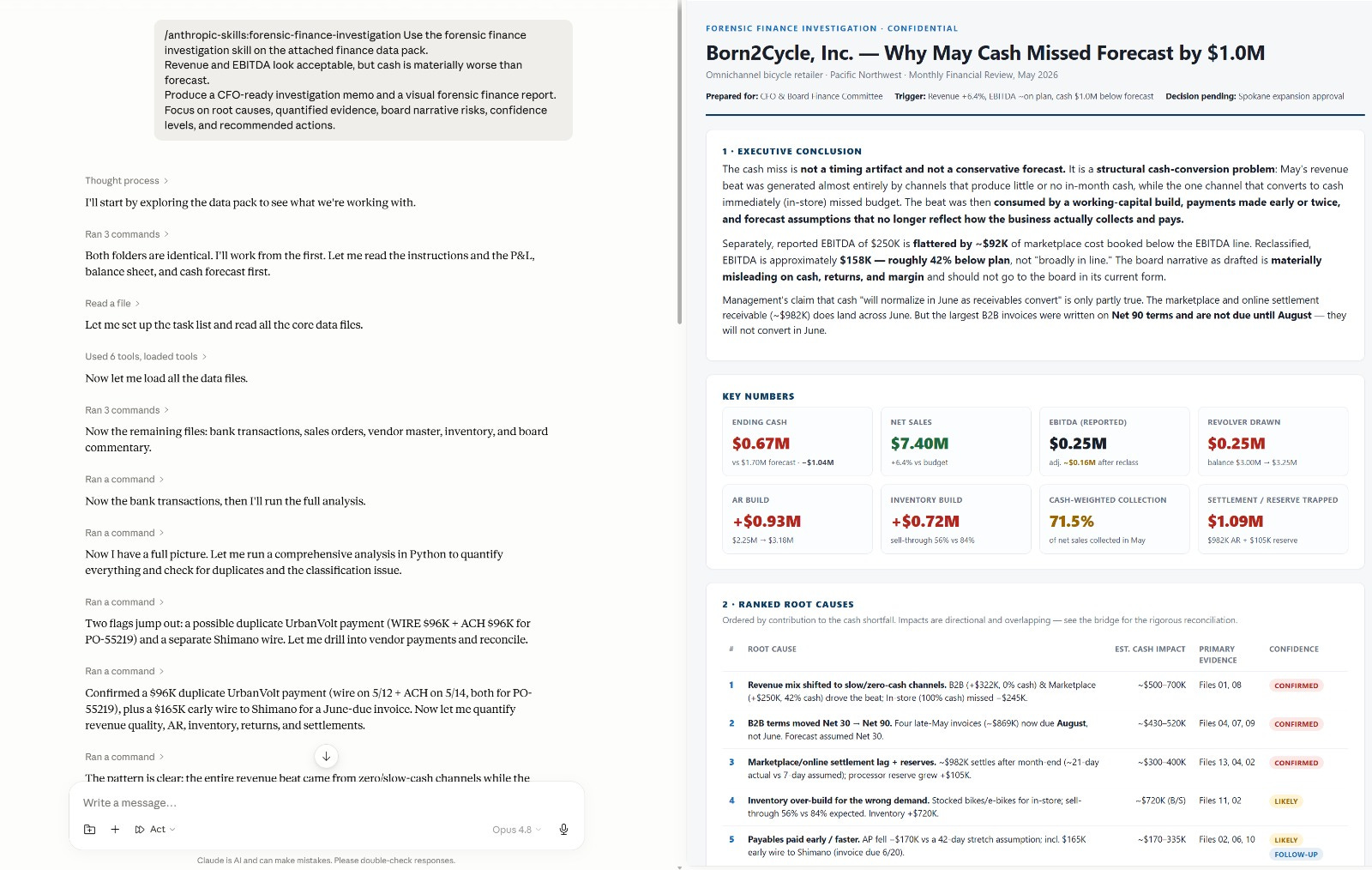
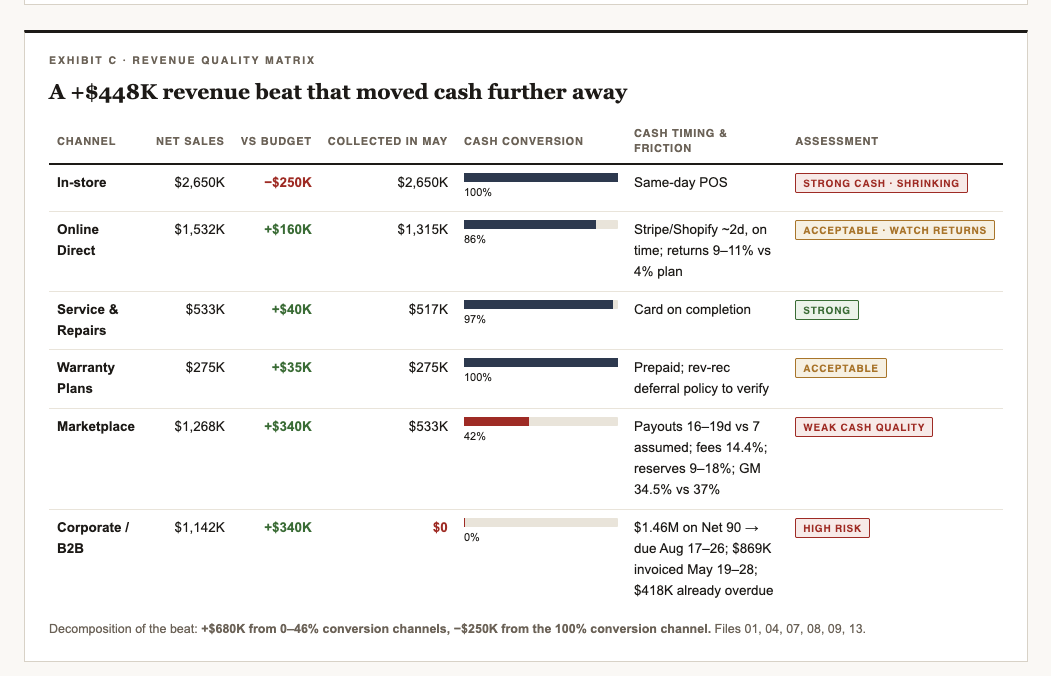
The first is a chatbot but the second is a forensic investigator.
This week is the first time a model could be the second one.
So I built the test.
Let’s dive in.
How to run a forensic-finance investigation with Claude Fable
This is not a prompt. It is a skill.
A clever prompt works once. Next month you can’t trust the same rigor, because the quality was in how you phrased it that day.
A skill encodes the method. The investigation runs the same disciplined way every time, on any data pack, no matter who runs it.
The forensic-finance-investigation skill gives the model a method. Start with the cash problem. Build the EBITDA-to-cash bridge. Test revenue quality. Inspect working capital. Challenge the forecast assumptions. Review the board narrative. Separate signal from noise. End with a CFO-ready conclusion and a confidence level on every finding.
It also makes the model comparison fair.
Test two models on a prompt and you are testing which one guesses your intent. Give both the same skill and the same messy pack, and you are testing which one can actually do the work.
Install the skill, select the data pack folder in Cowork, and give it the job.
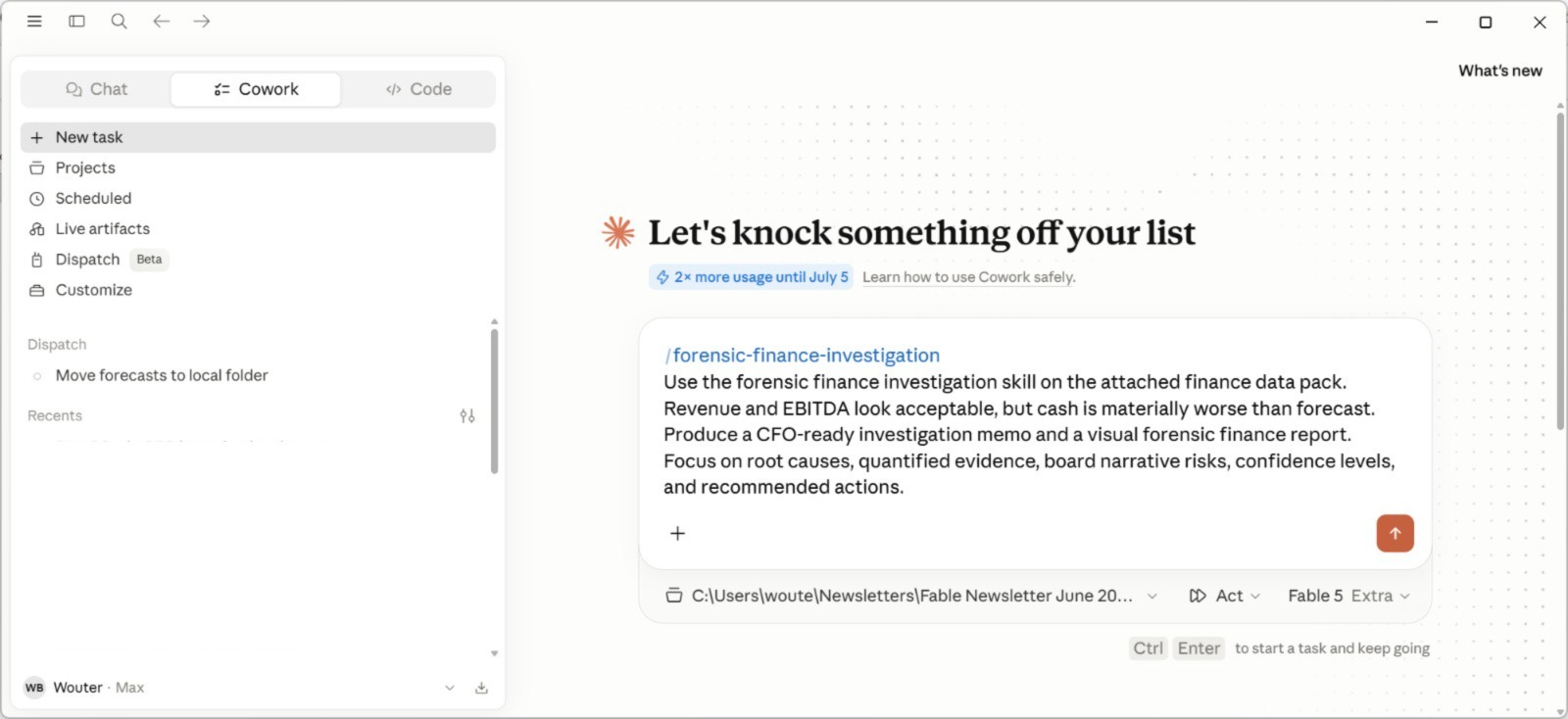
COPY/PASTE PROMPT
/forensic-finance-investigation Use the forensic finance investigation skill on the attached finance data pack. Revenue and EBITDA look acceptable, but cash is materially worse than forecast. Produce a CFO-ready investigation memo and a visual forensic finance report. Focus on root causes, quantified evidence, board narrative risks, confidence levels, and recommended actions.Then you get out of the way and let it investigate.
Here is what came back.
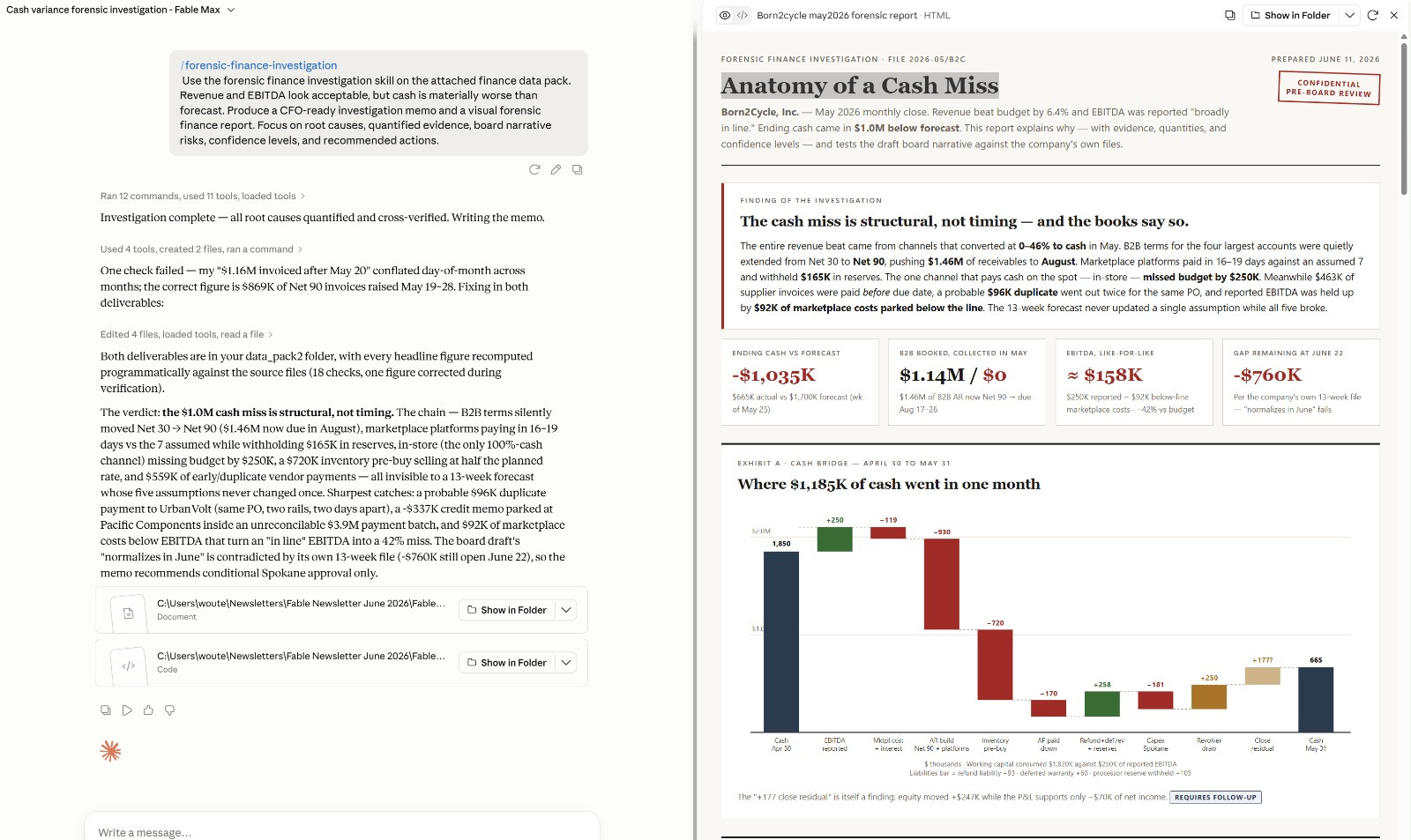
Here’s the forensic-finance-investigation skill (.md) and data pack.zip; download it below
Run the same investigation on your own close this weekend.