

Most AI in finance is built to answer questions faster.
That’s not what CFOs are asking for.
On almost every first call with CFOs, I hear the same thing:
“We don’t need AI to answer questions.
We need AI that challenges us.”
Most AI never tells you when your assumptions are wrong.
Until now.
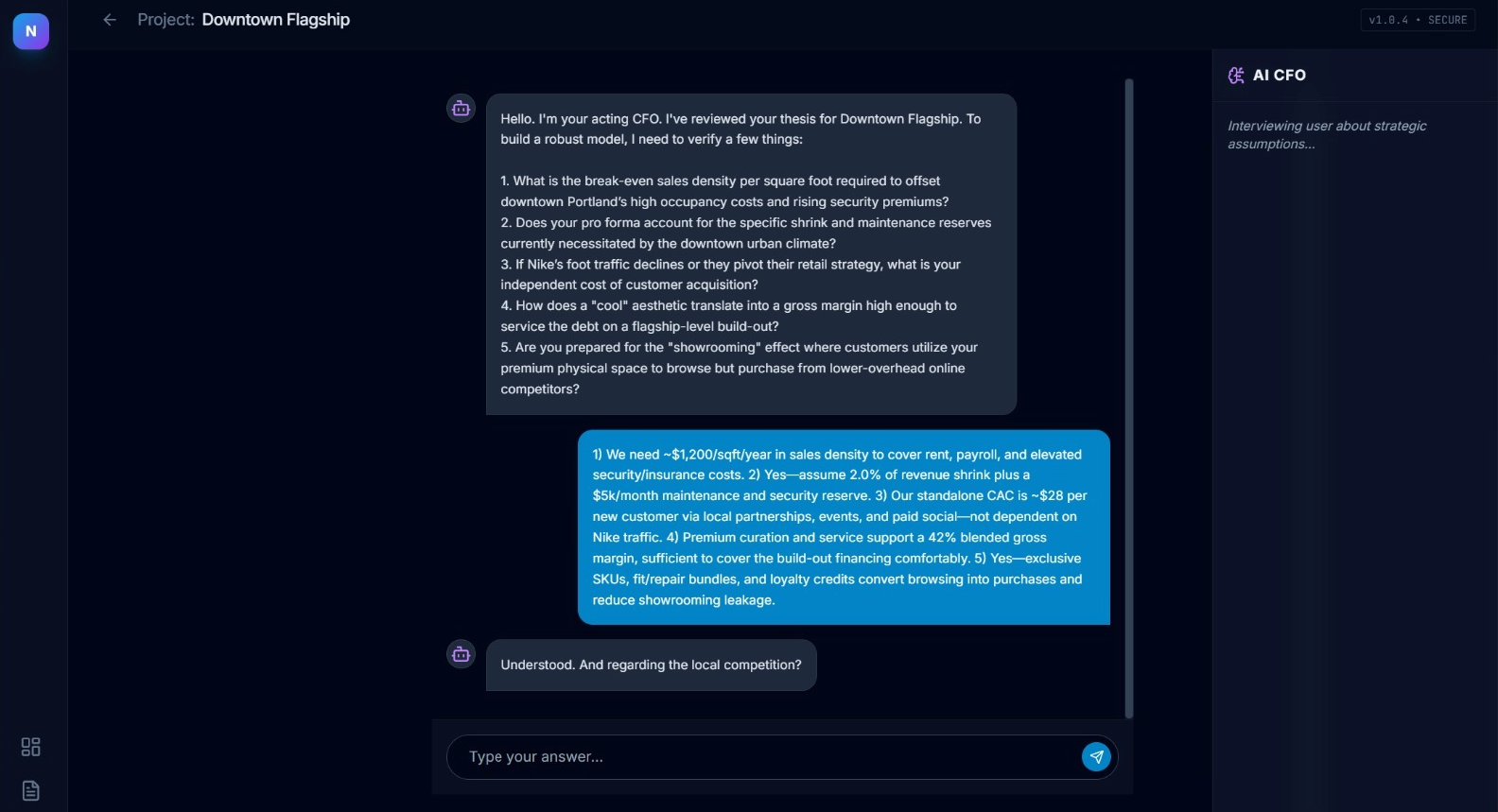
I built an AI decision cockpit for CFOs that challenges assumptions while the model is being built, not after the decision is already locked in.
This is not a hard-coded model.
I used AI to build an AI that builds the model.
Your answers shape the drivers, the defaults, the structure, and the constraints.
And once the model exists, the cockpit does something most financial tools never do.
It pushes back.
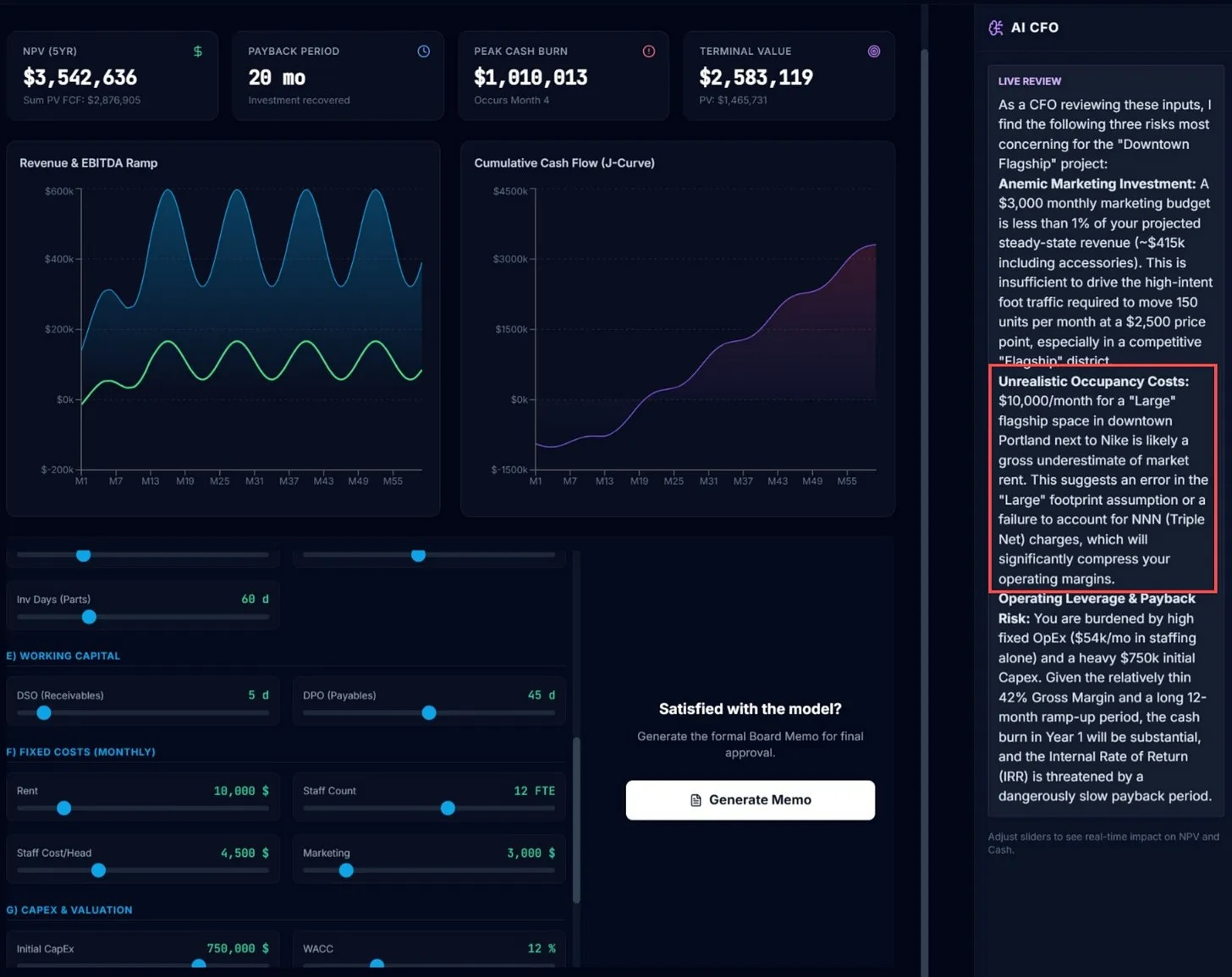
That moment usually sounds simple.
“Should we open a new store?”
But that question is never just a model.
A timing bet.
It’s a capital allocation decision.
A cash commitment that compounds over years.
And most financial tools only engage after those commitments are already implied.
This decision cockpit is for the moment before that happens.
How This AI Cockpit For CFOs Works
Instead of asking you to fill in assumptions and trust the output, the cockpit guides you through the decision itself. The questions already assume intent. For example, when modeling a flagship store next to Nike, the AI doesn’t ask generic retail questions. It asks:
“If Nike’s foot traffic declines or they pivot their retail strategy, what is your independent cost of customer acquisition?”
That single question already encodes the thesis… that premium Nike customers will convert into higher-ticket buyers next door.
You answer. And based on that conversation, the AI builds the model.
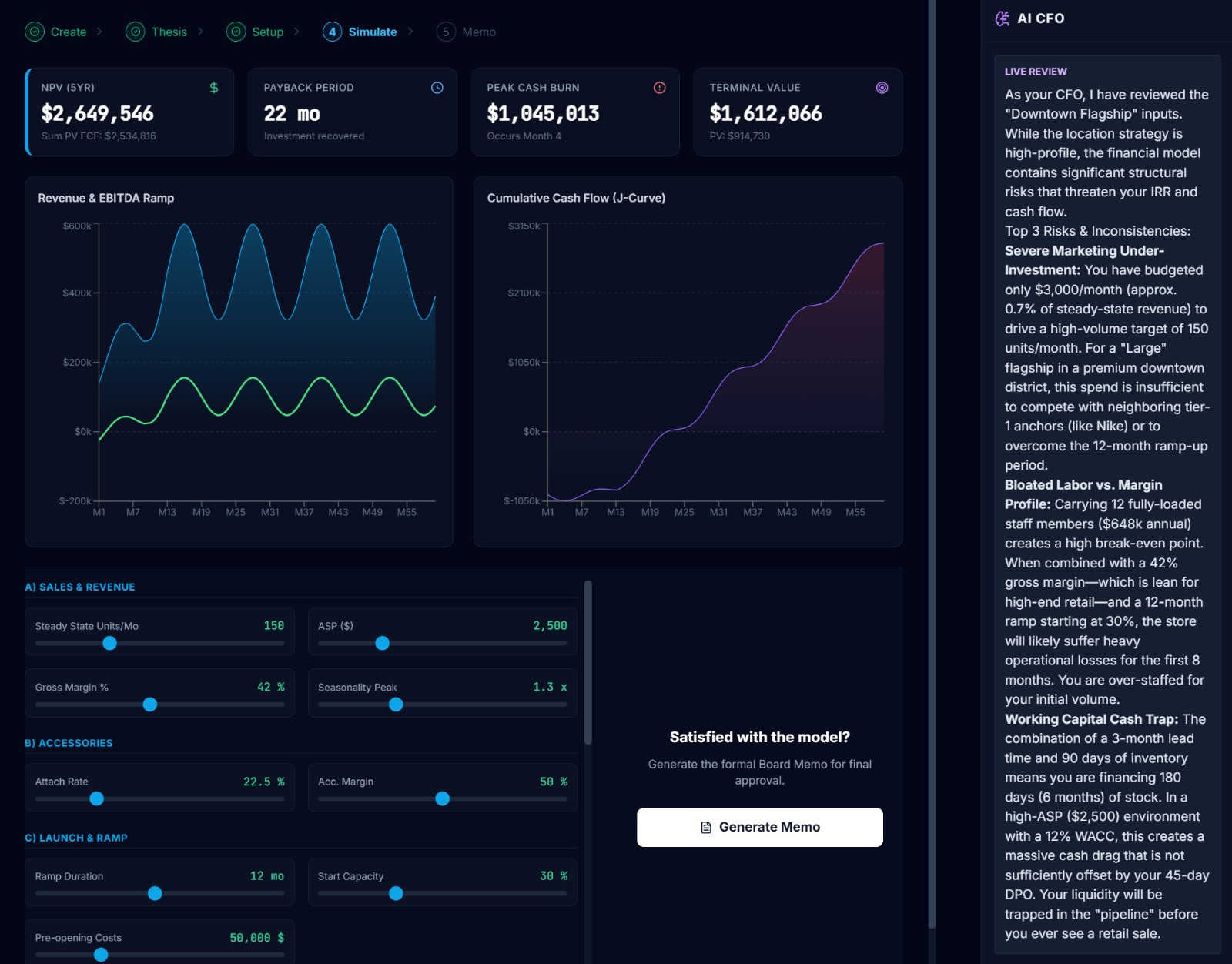
When I lowered the rent assumption to make the economics work, the AI pushed back.
With judgment. It told me, in plain language:
“You’re tweaking the model in a way that makes the business viable on paper, but unlikely in reality.”
You can easily build it for yourself with a single prompt I’ll share shortly.
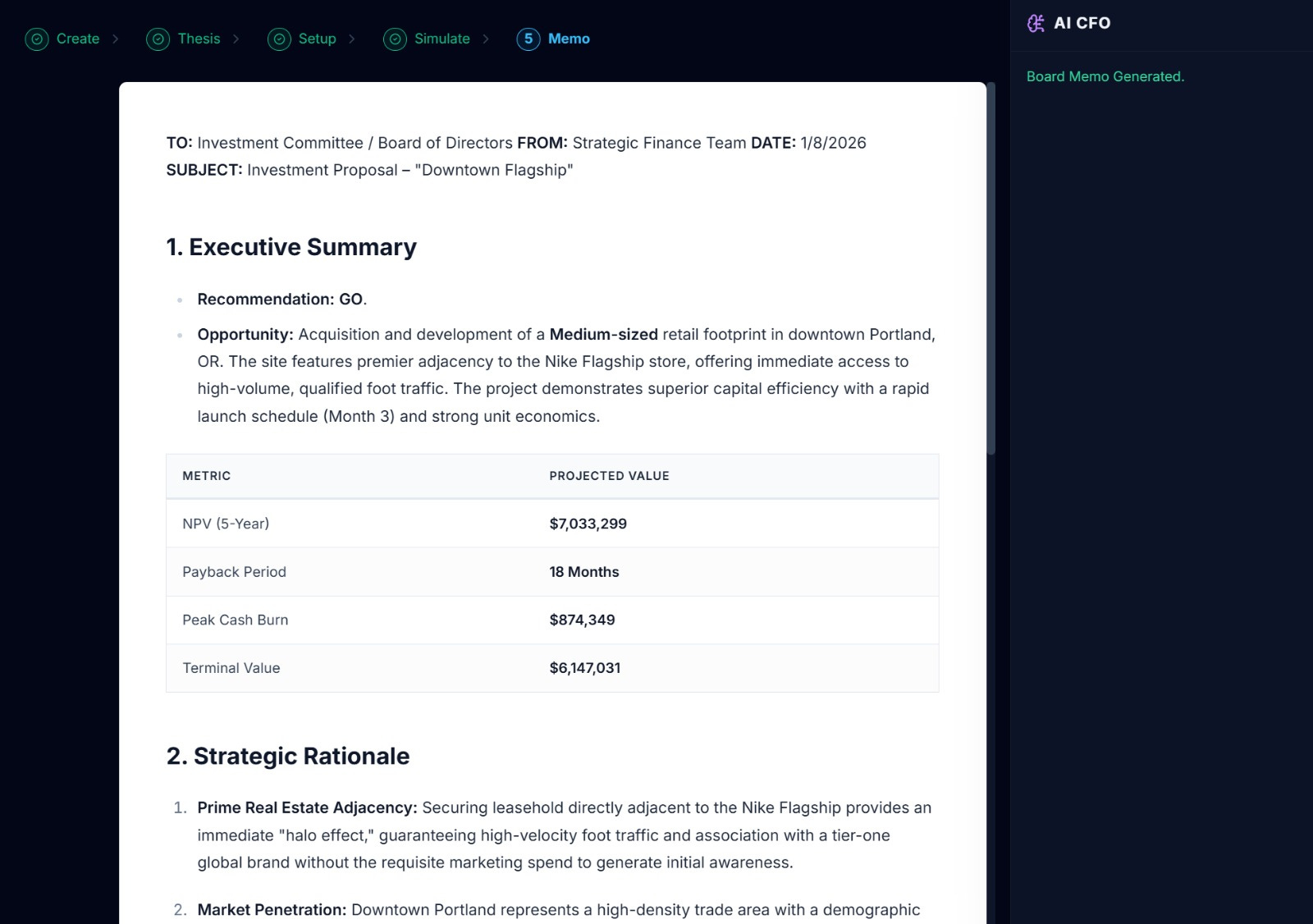
Finally, you can impress your CEO and the Board.
